
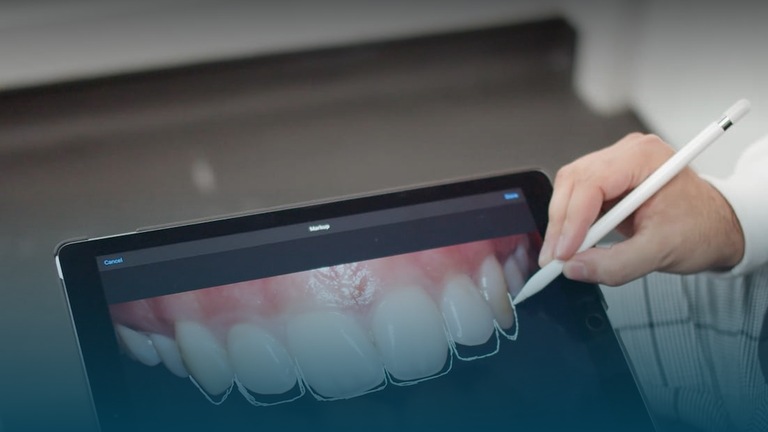


If you’ve got a chipped tooth, a gap that bothers you, or teeth that have picked up years of discolouration, composite bonding is one of the fastest ways to fix it. It’s a same-day cosmetic treatment that uses tooth-coloured resin to reshape, repair or brighten your teeth, without drilling, injections or weeks of waiting for a lab-made restoration. For Londoners short on time but not on standards, it’s become a go-to option for a quick smile refresh.
This guide walks through how composite bonding actually works, what it costs, how long it lasts, and how it compares with veneers, so you can decide whether it’s right for your smile.
What is Composite Bonding?
Composite bonding is a cosmetic dental treatment where a dentist applies a malleable, tooth-coloured resin directly onto the surface of a tooth. The material is shaped by hand, hardened with a curing light, then polished until it blends in with the tooth next to it.
Unlike veneers or crowns, nothing is sent off to a lab. The whole process happens in your dentist’s chair, usually in a single visit. Because the resin sits on top of the existing enamel rather than replacing it, very little, often none, of the natural tooth needs to be removed.
You might hear it called cosmetic bonding, tooth bonding or dental bonding. They all refer to the same technique.
What Can Composite Bonding Fix?
Bonding is a flexible treatment, which is part of why it’s so popular across London’s cosmetic dental clinics. It’s commonly used to treat:
- Chipped or cracked teeth
- Small gaps between teeth
- Uneven or worn edges
- Discoloured or stained teeth that haven’t responded to whitening
- Teeth that look slightly crooked or out of proportion
- Minor cosmetic repairs after an accident
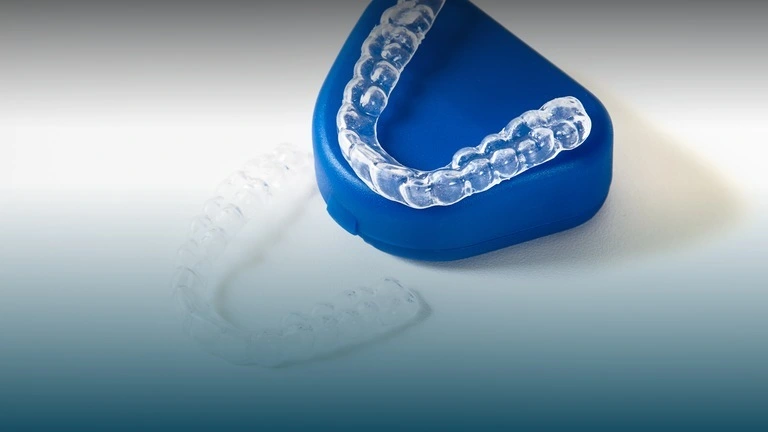
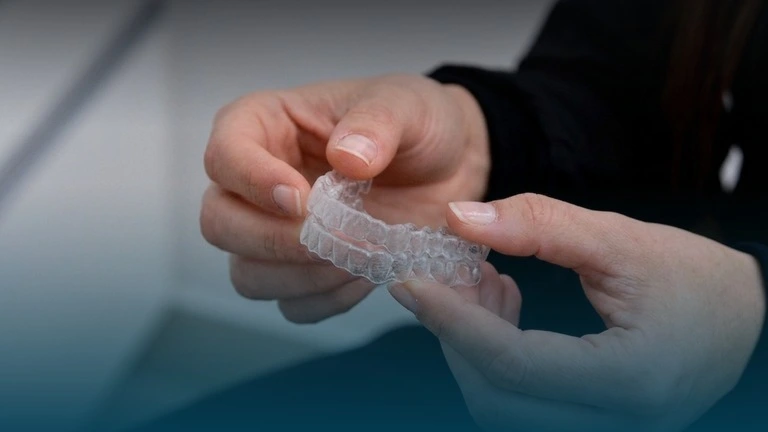
It’s best suited to minor to moderate imperfections. If your teeth are significantly misaligned, a dentist may suggest straightening them with Invisalign® first, so the bonding sits on a better foundation and lasts longer.
How Does the Treatment Work?
A typical composite bonding appointment follows a similar pattern, whichever London clinic you visit:
- Consultation and smile assessment:
Your dentist checks that your teeth and gums are healthy enough for bonding, and talks through what you’d like to change.
- Shade matching:
The resin is colour-matched to your natural teeth, or to a whiter shade if you’re whitening beforehand.
- Light surface preparation:
The tooth is gently cleaned, similar to a polish, to help the resin bond properly. No drilling is usually needed.
- Application and sculpting:
The dentist builds up the resin in layers, shaping it by hand to correct the chip, gap or shape.
- Curing:
A special light hardens each layer as it’s applied.
- Final polish and bite check:
The tooth is smoothed so it feels comfortable against your bite and blends with the surrounding teeth.
Most patients are in and out within a couple of hours, and some clinics, including W Dental, offer a follow-up check a week or two later to make sure everything still looks and feels right.
How Long Does Composite Bonding Last?
Composite bonding typically lasts around five years with reasonable care, though this varies depending on which teeth were treated, your bite, and daily habits like nail-biting or chewing ice. The advantage is that it’s easy to touch up: small chips can usually be repaired or re-polished in a single appointment, rather than needing a full replacement.
Veneers, by comparison, tend to last longer, often ten to fifteen years, but involve more preparation and a higher cost upfront.
Composite Bonding vs Veneers: Which is Right for You?
Both treatments improve the shape and colour of your smile, but they suit different situations.
- Composite bonding is more conservative, faster, and generally more affordable. It doesn’t permanently alter the tooth underneath so that it can be adjusted or removed later.
- Veneers are thin porcelain shells bonded to the front of the tooth. They usually require a small amount of enamel to be removed and are custom-made, so treatment takes longer, but the results tend to be more stain-resistant.
If you’re after a quick, low-commitment improvement, bonding is usually the better starting point. If you want a longer-term transformation and don’t mind the extra time and cost, veneers may suit you better. A dentist can advise which fits your teeth and goals during a consultation.
What Does Composite Bonding Cost in London?
Prices vary between clinics and depend on how many teeth are being treated and how much reshaping is needed. At W Dental, composite bonding packages start from £150 per tooth as part of a full smile transformation, with 0% finance available from around £4.20 a day so the cost can be spread over time. Exact pricing for your teeth is confirmed during a free consultation, once a dentist has assessed what’s needed.
COMPOSITE BONDING · LONDON
Transparent pricing, no hidden fees
Free
Smile
consultation
COMPOSITE BONDING
£150
per tooth*
0%
Finance
available
*Minimum of 10 teeth. Exact pricing confirmed at your free consultation.
BOOK YOUR COMPOSITE BONDING CONSULTATIONView our full fee guide for all treatments
Good Candidate for Composite Bonding
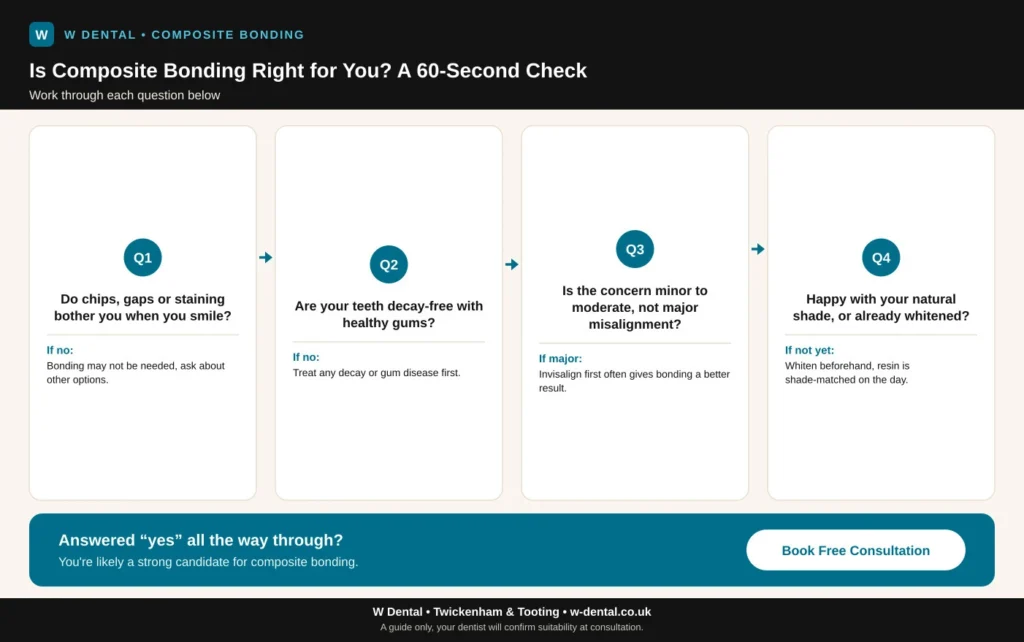
Composite bonding works best on teeth that are otherwise healthy. Good candidates typically have:
- No active tooth decay
- Healthy gums that don’t bleed
- Realistic expectations about what bonding can, and can’t, achieve
- Minor to moderate cosmetic concerns, rather than significant misalignment
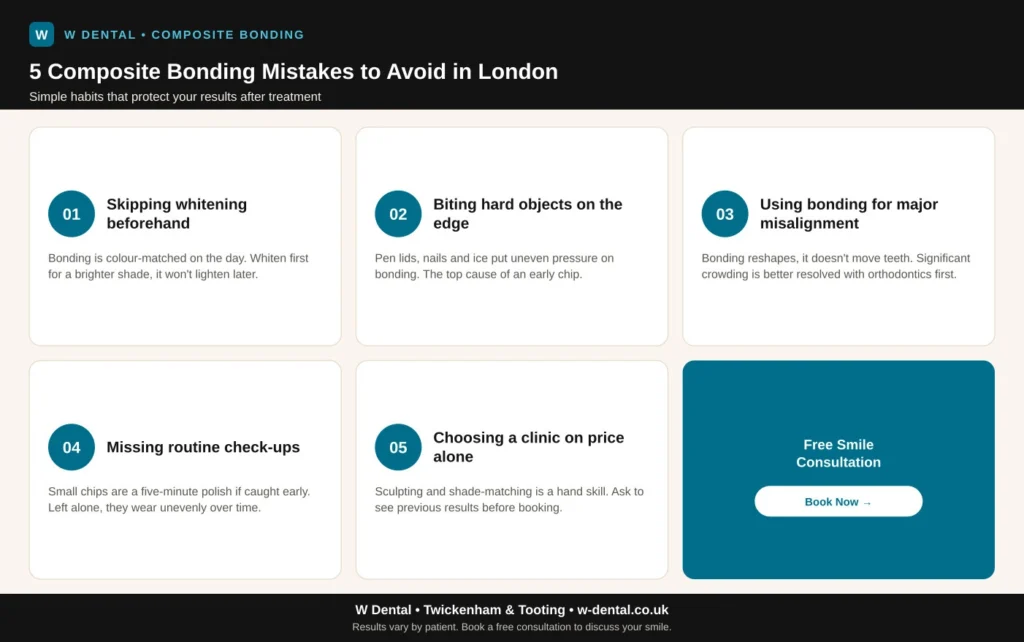
If you’re considering whitening as well, it’s worth doing this before bonding, since the resin is colour-matched to your teeth at the time of treatment and won’t whiten afterwards the way natural enamel can. As with any cosmetic treatment, suitability and results vary from patient to patient, and a dentist will confirm this at your consultation.
Aftercare For Composite Bonded Teeth
Composite bonding doesn’t need special maintenance, just sensible habits:
- Brush and floss as normal to keep the bonded edges clean
- Avoid biting directly on hard objects like pen lids, fingernails or ice
- Cut back on stain-heavy habits such as smoking, red wine and dark tea or coffee, since composite resin can pick up surface stains more readily than porcelain
- Keep up with routine check-ups so small chips can be caught and polished early, before they need a bigger repair
Why Choose W Dental for Composite Bonding in London
At W Dental’s clinics in Twickenham and Tooting, composite bonding is carried out by GDC-registered dentists using digital scans rather than messy impressions, so treatment plans are based on an accurate picture of your teeth from the start. Both clinics offer same-day transformations, a free smile consultation, and sedation options for anyone who feels nervous about dental visits.
Composite bonding is one of the quickest ways to feel more confident about your smile, and for many patients in London, it’s the treatment that finally makes them comfortable smiling in photos again. If chips, gaps or discolouration have been bothering you, a short conversation with a dentist is usually enough to know whether bonding is the right next step.
FAQs
Does composite bonding hurt?
No. Because the resin sits on top of the tooth rather than replacing tooth structure, most patients don’t need an anaesthetic, and there’s no drilling involved.
Can composite bonding be reversed?
Yes. The resin can be removed without permanently damaging the tooth underneath, which makes it a more conservative option than veneers or crowns.
How many appointments does it take?
Most composite bonding is completed in a single visit, sometimes with a short follow-up a week or two later to check the fit and finish.
Will composite bonding stain?
It can pick up surface stains over time, more so than porcelain veneers, but regular polishing at check-ups keeps it looking fresh.
 Recent Blogs
 Book Your Visit