
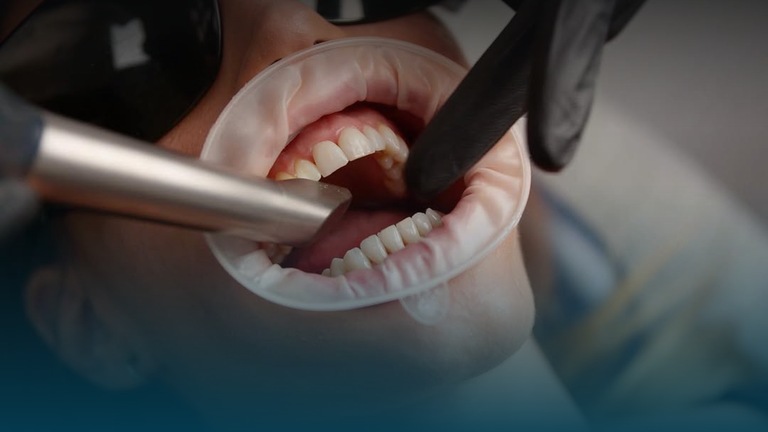


If your teeth are chipped, discoloured, gapped, or just not quite the shape you’d like, veneers are one of the most reliable ways to fix all of it at once rather than treating each issue separately. Dentists have used them for decades, but the materials and process have improved enough that “getting veneers” today looks very different from a decade ago.
This guide covers what veneers actually are, the difference between your two main options, what they cost in London, and how to tell if they’re the right fit for your teeth before you book anything.
What Are Dental Veneers?
A veneer is a thin, tooth-coloured shell that’s bonded to the front surface of a tooth. Instead of fixing one problem at a time, whether that’s a chip, a stain that won’t budge, or a slightly odd shape, a single set of veneers can address several of these issues in one go, giving you a more even, uniform smile.
They’re different from crowns, which cover the entire tooth and are typically used to save a damaged or weakened tooth. Veneers are more conservative and cosmetic in focus, covering just the visible front surface.
Composite vs Porcelain Veneers: What’s the Difference?
Most dental veneers fall into one of two categories, and the right one depends on your budget, timeline, and how long you want the result to last.
Composite veneers
Composite veneers are applied directly onto the tooth in a single visit. There’s no drilling and no injections involved, which makes them a quicker, more accessible entry point. If one chips down the line, it can usually be repaired chairside rather than replaced entirely.
Porcelain veneers
Porcelain veneers are custom-crafted in a dental laboratory to your exact shape and shade. They involve a small amount of enamel being removed to prepare the tooth, but in return, they offer better translucency, stronger stain resistance, and a longer lifespan, often 10 to 15 years or more with proper care.
| Factors | Composite Veneers | Porcelain Veneers |
| Procedure | Applied directly, single visit | Lab-made, usually two visits |
| Enamel removal | None | Minimal, a thin layer |
| Cost (per tooth) | From £450 | From £895 |
| Lifespan | Several years, varies by care | 10 to 15 years or more |
| Stain resistance | Lower, more porous | High |
| Repairs | Chairside, same day | Usually needs replacing |
| Best for | Quick fixes, lower budget | Long-term, natural translucency |
Neither option is universally “better”. Composite suits patients who want a same-day, more affordable result or a lower-commitment starting point. Porcelain suits those prioritising longevity and a closer match to natural enamel.
What Can Veneers Fix?
Veneers are commonly used for:
- Chipped or worn front teeth
- Stains and discolouration that haven’t responded to whitening
- Small to moderate gaps between teeth
- Uneven tooth size or shape
- Mild crowding or misalignment
Most patients don’t need all of their teeth covered. Many treatment plans focus on the six to eight teeth visible when you smile, since that’s what actually shows in day-to-day conversation, rather than the full set.
For more significant misalignment, a dentist may recommend straightening treatment such as Invisalign first, either on its own or combined with veneers afterwards, rather than relying on veneers alone to correct the bite.
Veneers vs Teeth Whitening: Which Should You Choose First?
If discolouration is your only concern, whitening is usually the simpler and cheaper first step, and plenty of people find it’s all they need. Veneers become the better option once whitening won’t solve the issue, such as staining that doesn’t respond to treatment, or when there’s a structural concern like a chip, gap, or shape alongside the colour. Some patients also whiten their natural teeth first, then have their veneers matched to that brighter shade, rather than the other way around.
The Veneer Process at W Dental
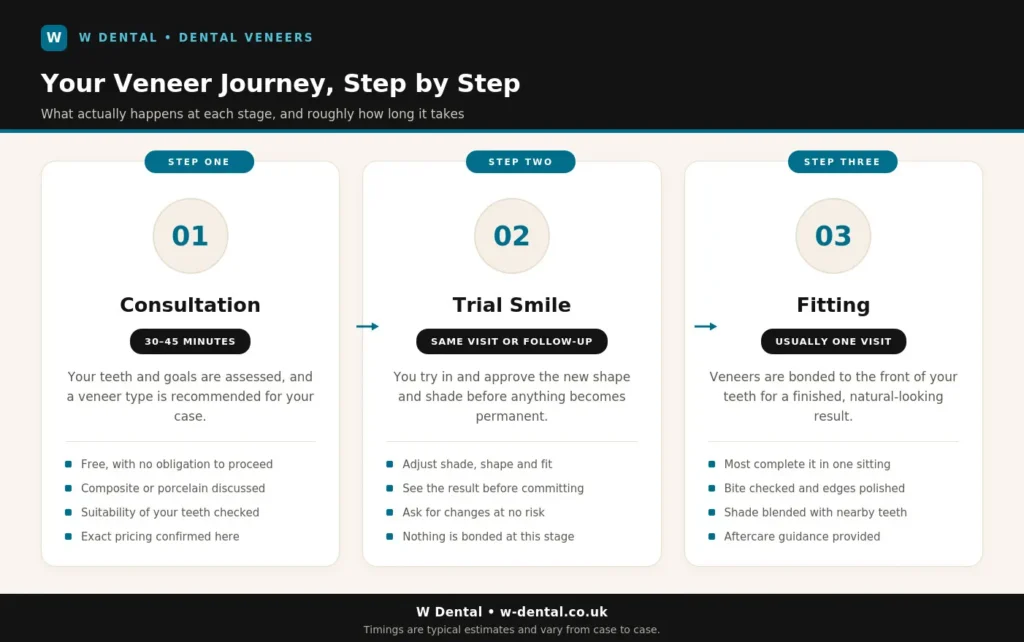
The overall process usually follows three stages:
- Consultation:
Your teeth and goals are assessed, and your dentist recommends the veneer type suited to your case. This is free, with no obligation to proceed.
- Trial smile:
Before anything is permanently bonded, you get to try in and approve your new smile, adjusting shade, shape, or fit as needed. This step exists specifically so there are no surprises once the veneers are fitted for good.
- Fitting:
The veneers are bonded to the front surface of your teeth. Most patients complete this stage in a single appointment.
What Do Dental Veneers Cost in London?
Pricing varies by clinic and by how many teeth are involved. At W Dental:
- Consultation: free (welcome offer)
- Composite veneers: from £450 per tooth
- Porcelain veneers: from £895 per tooth
0% finance is available on combined treatment plans over £500, which makes it easier to spread the cost. Your exact price will depend on your specific case and is confirmed at your consultation rather than estimated online.
How Long Do Veneers Last, and How Do You Look After Them?
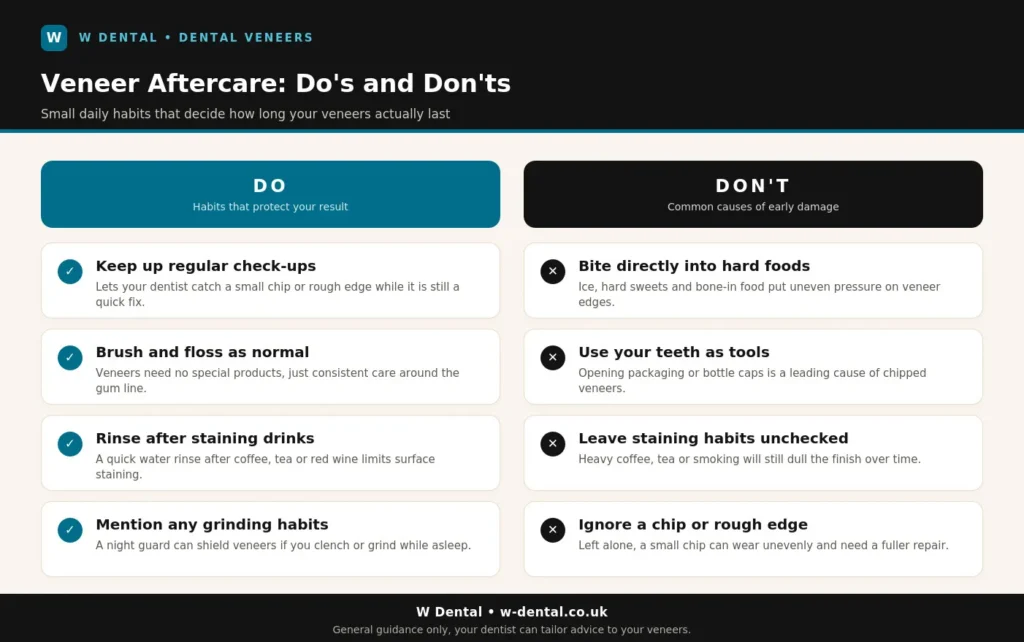
Porcelain veneers typically last 10 to 15 years, sometimes longer, with proper care. Composite veneers tend to have a shorter lifespan but are easier and cheaper to touch up if something chips.
A few habits help either option last:
- Keep up with regular dental check-ups
- Avoid biting directly into very hard foods, or using your teeth to open packaging
- Limit staining foods and drinks such as coffee, tea, and red wine, particularly with composite veneers, which are more porous than porcelain
Veneers aren’t removable once fitted. Because porcelain veneers involve a thin layer of enamel being prepared beforehand, they’re considered a permanent treatment rather than something you can simply take off.
Are Veneers Right for You?
Veneers tend to work best for people who:
- Have healthy teeth and gums, without active decay
- Want to fix cosmetic concerns like chips, stains, gaps, or shape, rather than structural damage
- Understand that porcelain veneers are a permanent commitment
- Have realistic expectations about maintenance and occasional touch-ups
If your main concern is a damaged or weakened tooth rather than a cosmetic one, a crown may be the more appropriate treatment, and your dentist can advise on this during your assessment.
Conclusion
Dental veneers remain one of the most dependable ways to fix multiple cosmetic concerns in one treatment, rather than tackling a chip here and a stain there. Whether composite or porcelain suits you better comes down to budget, timeline, and how long you want the results to last, and that’s exactly what a proper consultation is for. The next step isn’t guessing which option is right, it’s getting an assessment and a trial smile so you can see the result before committing to anything permanent.
(This is general dental information. Your suitability for composite or porcelain veneers can only be confirmed by a dentist after an assessment.)
FAQs
Can veneers fix crooked or misaligned teeth?
Yes, for mild misalignment or gaps. For more significant cases, a dentist may recommend Invisalign first, either alone or alongside veneers.
Do dental veneers stain?
Porcelain veneers resist staining well, though it’s still worth limiting coffee, tea, and red wine. Composite veneers are more porous and may need more frequent polishing.
Can you eat normally with veneers?
Yes, once they’re bonded, most foods are fine. It’s best to avoid biting directly into very hard foods or using your teeth as tools.
What are veneers made of?
Most commonly high-quality porcelain, chosen for strength and a natural appearance, though composite resin is also widely used for a faster, more affordable option.
Are veneers removable?
No. Porcelain veneers are a permanent treatment since a thin layer of enamel is prepared beforehand. They can be replaced if needed, but not simply taken off.
How many veneers do most people need?
It varies by smile, but many patients only need the teeth visible when smiling covered, often six to eight, rather than a full set.
 Recent Blogs
 Book Your Visit