


Most people looking into teeth whitening in London have already tried a supermarket kit, a whitening toothpaste, or one of those charcoal pastes doing the rounds online, and found the results underwhelming. That is not a coincidence. Retail products are legally limited to a fraction of the strength a dentist can use, which is exactly why professional whitening produces a noticeably different result.
This guide covers how professional whitening actually works, the three main options and what sets them apart, what causes staining in the first place, realistic costs, and how to tell whether your teeth are suitable before you book anything.
What Professional Teeth Whitening Actually Does
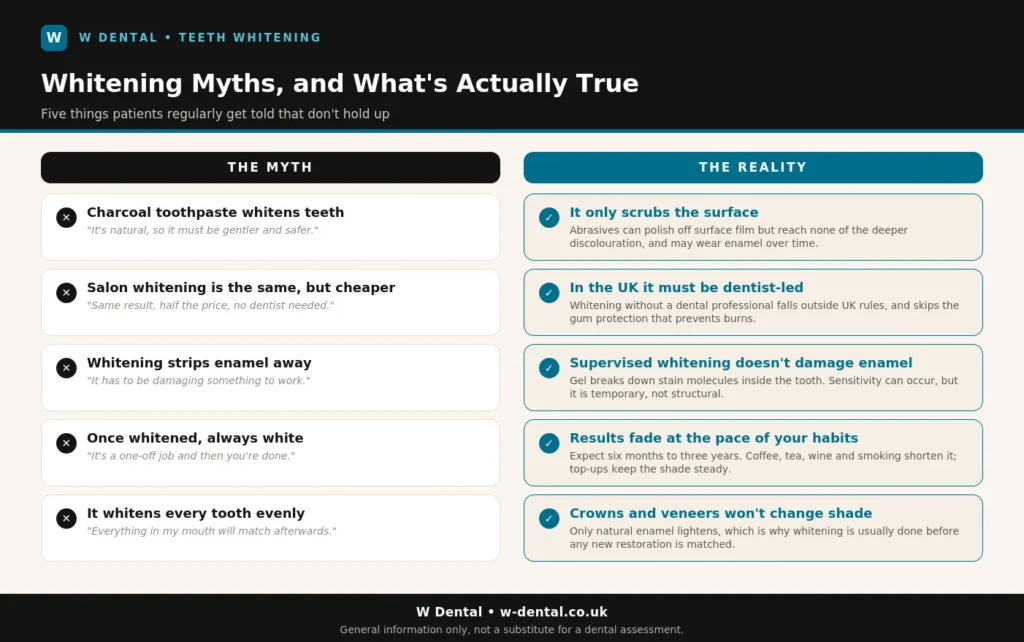
Professional whitening uses a peroxide-based gel to break down stain molecules inside the tooth, rather than scrubbing the surface the way an abrasive toothpaste does. That distinction matters, because surface polishing can only remove what sits on top of the enamel, while whitening gel works on the deeper discolouration that builds up over years.
In the UK, whitening is legally restricted to dental professionals, and any high-street or salon service offering it without a dentist involved is operating outside those rules. The practical reason for the restriction is safety: without custom trays and gum protection, stronger gel can cause chemical burns to soft tissue and unnecessary sensitivity.
There is also the matter of what whitening cannot do. It lightens natural enamel, but it does not affect crowns, veneers, composite bonding, or white fillings. If you have existing restorations at the front of your mouth, your dentist will usually recommend whitening your natural teeth first, then matching any new restoration work to the brighter shade afterwards.
Why Does Tooth Discolouration Happen?
Not all staining has the same cause, and the cause affects how well whitening works.
Extrinsic stains:
Extrinsic stains sit on the outer surface of the enamel and come from what passes over your teeth day to day: coffee, tea, red wine, dark berries, curry, smoking and vaping. These respond well to whitening.
Intrinsic stains:
Intrinsic stains sit deeper within the tooth structure. They can come from ageing, as enamel thins and the yellower dentine beneath shows through, from trauma to a tooth, from certain antibiotics taken in childhood, or from a root canal that has left a single tooth noticeably darker than its neighbours.
Intrinsic discolouration is harder to shift and sometimes needs a different approach, which is why a single dark tooth is treated differently from general dullness across the whole smile.
The Whitening Options at W Dental
W Dental offers three routes, and the right one depends on how much lift you want, your timeframe, and whether the problem is one tooth or all of them.
Boutique home whitening:
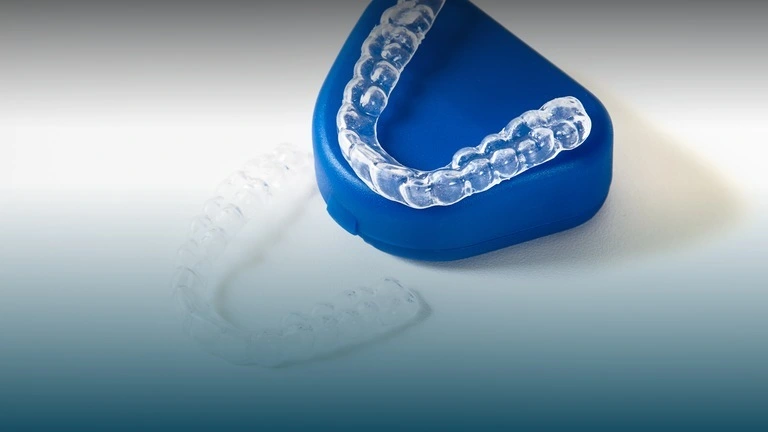
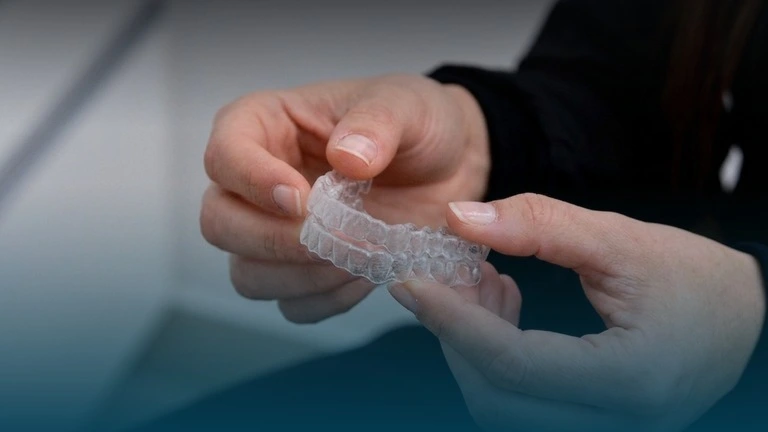
Boutique home whitening is a professional-grade kit with custom-fitted trays made from a scan of your teeth. You whiten at your own pace at home, with visible results in as little as four to seven days.
Enlighten Evolution:
Enlighten Evolution combines high-end home trays with a final in-clinic power boost. It is the only system in the world that guarantees a B1 shade, which is the brightest natural tooth shade, making it the option to look at if you want maximum lift rather than a modest brightening.
Internal whitening:
Internal whitening treats a single tooth that has darkened after root canal treatment. Rather than whitening the outside, the gel works from within the tooth to bring it back in line with the ones on either side.
| Factors | Boutique Home | Enlighten Evolution | Internal Whitening |
| Price from | £395 | £695 | £250 |
| Where | At home | Home trays plus in-clinic boost | In clinic |
| First results | 4 to 7 days | Around 2 weeks | Varies by tooth |
| Shade guarantee | No | Yes, B1 | Not applicable |
| Treats | Whole smile | Whole smile | One dark tooth |
| Best for | Gradual, flexible lift | Maximum brightness | Post root canal discolouration |
How the Process Works
Whitening at W Dental follows a three-stage process, and none of it involves the putty impressions you might remember from years ago.
- The digital scan:
An iTero scanner takes a precise 3D map of your teeth, which is what allows the trays to fit closely enough to stop gel leaking onto your gums.
- The custom kit:
Once your bespoke trays are made, you are given professional-strength gel and instructions for using it safely.
- The transformation:
You wear the trays as directed, usually overnight or for a few hours daily. Most patients reach peak brightness within about two weeks.
How Long Do Results Last?
Professional results typically last between six months and three years. That is a wide range because it depends almost entirely on habits rather than on the treatment itself. Heavy coffee, tea, red wine or smoking will dull the result faster, while regular brushing, routine check-ups and moderating those staining habits will stretch it out considerably.
Top-up gel is straightforward once you already have custom trays, so many patients maintain their shade with an occasional short top-up rather than repeating the full treatment.
The First 48 Hours Matter Most
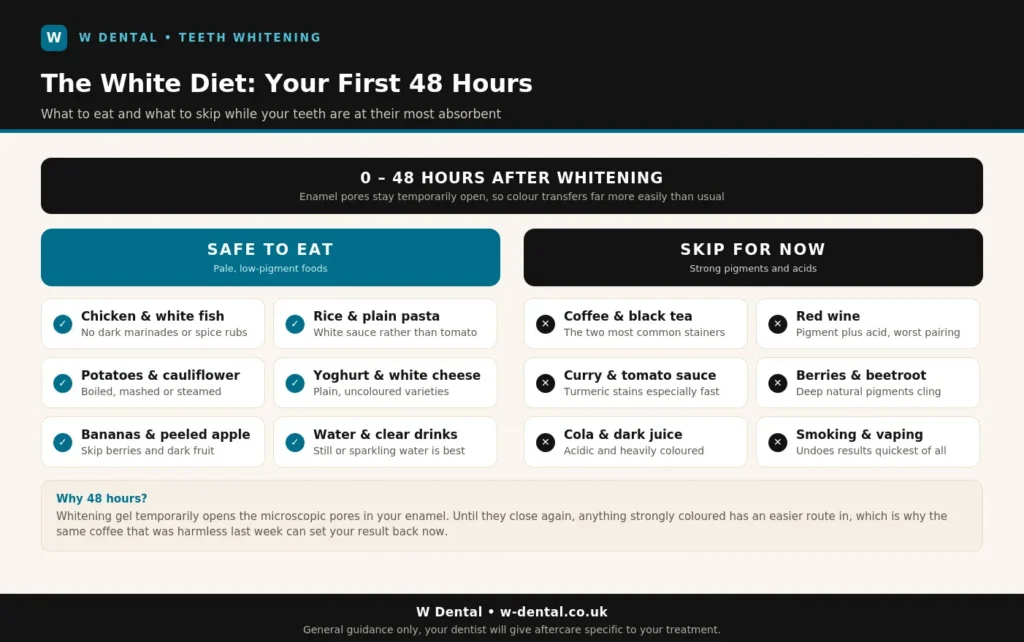
Freshly whitened teeth are temporarily more porous and absorb colour more readily, so it is worth sticking to light-coloured foods and water during that window. Think chicken, rice, pasta with a white sauce, and avoid coffee, tea, red wine, tomato sauce, curry and dark berries.
Some temporary sensitivity is normal and usually settles within a few days. Professional systems include built-in desensitising agents, and because custom trays keep the gel where it belongs, there is far less irritation than unregulated kits tend to cause.
Is Whitening Right for You?
Whitening tends to work best if you:
- have healthy teeth and gums, with no untreated decay or gum disease
- are looking to lift natural enamel rather than change the colour of crowns or veneers
- have realistic expectations, since results vary between individuals
- are over 18, as UK rules restrict cosmetic whitening for under-18s
If you have decay or gum inflammation, that gets treated first. Whitening an unhealthy mouth can be uncomfortable and will not give a reliable result. Anyone pregnant or breastfeeding should also raise this at the consultation, as whitening is generally postponed.
What Does Teeth Whitening Cost in London?
At W Dental, pricing currently starts as follows:
- Whitening consultation: free (welcome offer)
- Internal whitening: from £250
- Boutique home whitening: from £395
- Enlighten Evolution: from £695
0% finance is available on treatments over £500. Your exact cost is confirmed at the consultation once a dentist has seen your teeth.
Conclusion
Whitening is one of the least invasive ways to improve a smile, since nothing is drilled, removed or permanently altered, and that is a large part of its appeal. The main decision is not whether to whiten but which route fits your situation: a custom home kit for a gradual lift, Enlighten for maximum brightness, or internal whitening for a single dark tooth. A free consultation will confirm which suits your teeth, and whether anything needs treating first.
(General dental information only. Suitability, expected results and costs can only be confirmed by a dentist after an assessment.)
FAQs
Does teeth whitening damage your teeth?
No. Carried out under dental supervision, whitening does not damage enamel. Temporary sensitivity can occur but usually settles within a few days.
Are whitening strips from the shop safe?
They can be safe when used as directed, but the results are far less predictable than professional whitening, since retail products are limited to much lower gel strengths.
How soon can I eat normally afterwards?
Stick to light-coloured foods and water for the first 24 to 48 hours, then return to your usual diet.
Will whitening work on my crown or veneer?
No. Whitening only affects natural tooth enamel. Restorations stay the shade they were made, which is why whitening usually comes before any new restoration work.
How white is too white?
A good clinic calibrates the shade so it looks natural against your skin tone rather than aiming for the brightest possible result. This is worth discussing at your consultation.
Can I whiten if I have sensitive teeth?
Often yes. Mention it at your consultation so the gel strength and wear time can be adjusted, and desensitising products used alongside.
 Recent Blogs
 Book Your Visit